

Baking with fresh milled flour can produce incredible flavor, but it also brings a few new challenges that don’t always show up with store-bought flour. Dough may feel stickier, loaves can turn out denser, or the rise might seem slower than expected. These issues are common and usually fixable once you understand what’s causing them. Learning to troubleshoot the most frequent problems helps you bake with more confidence and get better results faster.
Most fresh-milled problems aren’t failures—they’re feedback.
One of the most common frustrations is a denser crumb. Fresh milled flour contains the full bran and germ, which can interfere with gluten development and limit how much the dough expands. Increasing hydration slightly, giving the dough a longer autolyse, or mixing a bit more gently often helps. Sticky dough is another frequent issue—fresh flour absorbs water differently, so what worked with commercial flour may suddenly feel too wet. Adding flour sparingly while focusing on proper gluten development usually solves it. Poor oven spring can stem from under-fermentation, weak gluten, or scoring that’s too shallow. Paying closer attention to dough temperature and fermentation time tends to improve volume more than any single ingredient change.

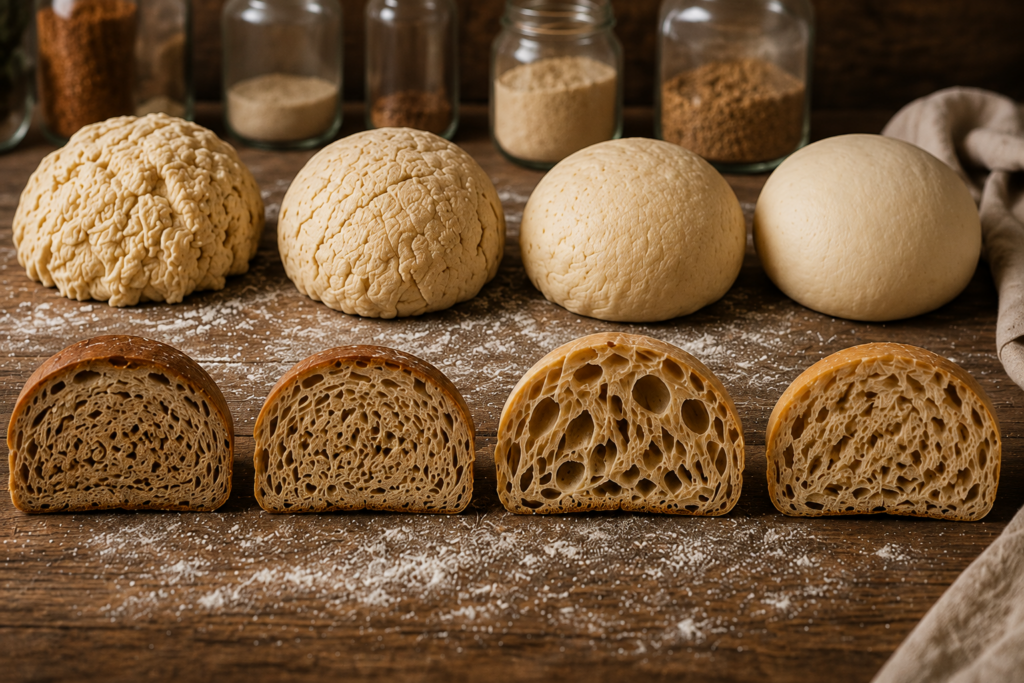
Some bakers assume these challenges mean fresh milled flour is simply harder to work with and give up too soon. In reality, most problems come from treating it exactly like aged, refined flour. Others wonder whether they need special techniques or expensive tools to succeed. While a few adjustments help, the core skills—good fermentation, adequate gluten development, and careful observation—remain the same. You don’t need to overhaul your entire process. Small, targeted changes usually make the biggest difference. Viewing each imperfect loaf as information rather than failure speeds up the learning curve.
Fresh milled flour behaves differently—adjust expectations and technique
Troubleshooting fresh milled bread is less about finding a single perfect formula and more about learning how this flour responds in your kitchen. Once you recognize the usual patterns—stickiness, density, slower fermentation—you can correct course quickly. Keep notes, make one change at a time, and trust that better results will follow. Every challenge you solve brings you closer to the flavorful, satisfying loaves that make fresh milling worth the effort.
Leave a Reply